
TerraPay Verify and J.P. Morgan’s Liink connect to check wallets and bank accounts before cross-border payments
Oct. 25, 2026 • Article • Banking & Payments

TerraPay and J.P. Morgan have connected TerraPay Verify with Kinexys Liink so participating financial institutions can check recipient details before sending cross-border payments to mobile money wallets or bank accounts. Announced on October 22, 2026, the integration allows Liink participants to configure bi-directional API queries with TerraPay Verify. It extends a validation network that already covers account details in more than 70 countries to wallet-related checks.
The partnership targets a source of payment failures: a 2026 LexisNexis Risk Solutions study cited during the rollout attributed 10% to 15% of cross-border payment failures to incorrect recipient or beneficiary details. Wallet identifiers can differ from conventional bank-account formats, making early checks useful but not a guarantee that a payment will complete. The companies have not publicly disclosed commercial terms, query pricing or country-by-country rollout plans, and the available information does not establish how much the integration will reduce failures in practice.
TerraPay and J.P. Morgan have linked TerraPay Verify with Kinexys Liink to let participating institutions check recipient details before sending cross-border payments to mobile money wallets or bank accounts. The partnership, formally announced on October 22, 2026, addresses a problem that can surface late in a transfer: the information supplied for a beneficiary may not match the destination account or wallet.
The integration connects banks and non-bank financial institutions on Liink directly to TerraPay Verify. Technical documentation indicates that network participants can configure bi-directional API queries between the two services for cross-border account-to-wallet routing. It gives institutions a way to seek validation before a payment is sent, rather than relying solely on checks after a transfer has entered the payment process.
How the connection works
Kinexys Liink is a payment-rail-agnostic, peer-to-peer permissioned blockchain network. In this context, permissioned means participation is restricted to approved network members; payment-rail-agnostic means the validation service is not tied to one method of moving money. Liink enables participants to validate account details across more than 70 countries. Connecting it to TerraPay Verify adds access to pre-validation for mobile money wallets alongside traditional bank accounts.
The bi-directional API arrangement matters because it allows participants to configure queries between the networks rather than treating wallet and bank-account checks as entirely separate tasks. An API, or application programming interface, is the software connection used to request and return information between systems. The available documentation confirms the configuration option but does not establish that every Liink participant has activated it.
The distinction between checking details and sending funds is important. The announcement concerns pre-validation: checking information before a cross-border transfer proceeds. It does not describe a new settlement rail or say that the integration itself moves money. A successful check may address an error in the recipient information, but the material released about the partnership does not show that it can prevent every kind of payment failure.
Why wallets present a different validation challenge
A 2026 LexisNexis Risk Solutions study cited in the integration rollout found that incorrect recipient or beneficiary details account for 10% to 15% of cross-border payment failures. That figure describes a wider cross-border payment problem; it is not a reported failure rate for payments using TerraPay Verify or Kinexys Liink.
The issue can be particularly awkward when a payment moves between a bank account and a mobile money wallet. Bank payment details commonly use standardized identifiers such as IBANs or SWIFT BICs. Mobile money wallets generally identify users by mobile phone numbers, known as MSISDNs, or by alphanumeric aliases. Those different formats create friction when a sender needs to establish whether the intended recipient corresponds to the destination provided.
Third-party aggregator routing can help validate names against account registers across those systems. The TerraPay–Liink connection is designed to make wallet and bank-account pre-validation available to financial institutions through the linked networks. The information provided does not specify the fields returned in an individual query or the precise checks available in every market. That limits what can be concluded about its effectiveness for any particular route.
What remains to be established
Kinexys by J.P. Morgan is the rebranded identity of Onyx by J.P. Morgan. Liink began in 2017 as the Interbank Information Network, an effort to address delays and data discrepancies in correspondent banking payments. The TerraPay integration builds on that validation focus by extending the types of destinations participants can check before a transfer.
The initiative is led on the executive side by Paul Atkinson, Head of Kinexys Liink Product at Kinexys by J.P. Morgan, and David Backshall, Vice President of Payment Partnerships at TerraPay. It is designed to align with objectives in the Financial Stability Board and G20 Roadmap for Enhancing Cross-Border Payments, which targets friction, high fees and settlement delays. Alignment with those objectives, however, is not evidence that the integration has already reduced any of those measures.
The companies have not publicly disclosed commercial terms, query pricing tiers or a country-by-country rollout schedule. Nor does the available information provide measured results showing whether pre-validation through this connection has lowered payment failures. For now, the verified development is the ability for network participants to configure checks spanning bank accounts and mobile wallets; its operational impact remains to be demonstrated.

Revolut’s expansion into UK consumer lending is facing closer regulatory scrutiny. The Financial Times reported on October 27, 2026, that the Bank of England’s Prudential Regulation Authority had ordered a Section 166 skilled-person review of the bank’s product approval processes and internal risk governance. The review comes as Revolut offers unsecured personal loans and prepares to introduce a domestic credit card, with mortgages planned later. Revolut UK CEO Francesca Carlesi has said the bank intends to package and sell loans through securitisation rather than retain substantial long-term credit exposure. Revolut is targeting a loan-to-deposit ratio of roughly 6%, far below the roughly 100% typical of incumbent British high-street banks. The strategy could support lending growth while limiting loans held on its balance sheet, but it does not eliminate credit risk. S&P Global has cited the possibility of higher credit losses as Revolut expands lending across multiple jurisdictions.
Sumitomo Mitsui Banking Corporation (SMBC) and Ant International signed a memorandum of understanding on October 26, 2026, to explore cross-border payments and digital treasury services. Their initial focus is Japan, Singapore and wider Southeast Asia. Engineering teams will examine whether Ant International’s Whale RTP platform can be integrated with SMBC’s institutional transaction banking and digital asset platforms. The agreement is exploratory, not the launch of a live settlement service. SMBC’s multi-market transaction banking rails are expected to support operations involving Ant International’s Alipay+, Antom and WorldFirst businesses. Ant International says its Whale platform processed more than US$600 billion in global treasury flows in 2025, with over 95% of transactions settling on the same day. Those figures describe the existing platform, not activity under the SMBC agreement. The MoU follows separate tokenized-deposit work involving Ant International and other banks, including a live OCBC solution and an HSBC pilot.
Tech Mahindra and Finastra announced on October 23, 2026, that Tech Mahindra had completed its acquisition of Finastra’s cash management products and related intellectual property. The deal moves Tech Mahindra beyond implementing banking software for clients and into owning transaction banking products. Financial terms were not disclosed. The acquired portfolio includes Fusion Cash Management, Fusion Virtual Accounts and Fusion Liquidity Management, along with CashPlus, Global CashPlus and associated transaction banking APIs. Finastra product engineering and customer success personnel are being moved into Tech Mahindra’s banking, financial services and insurance division. Tech Mahindra plans to integrate the products into its existing Finastra Centre of Excellence to maintain service continuity for banking clients. The acquisition follows Tech Mahindra’s earlier purchase of an 85% stake in Canadian fintech Avant Techno Solutions and comes as Finastra divests businesses to concentrate on lending and payments software.
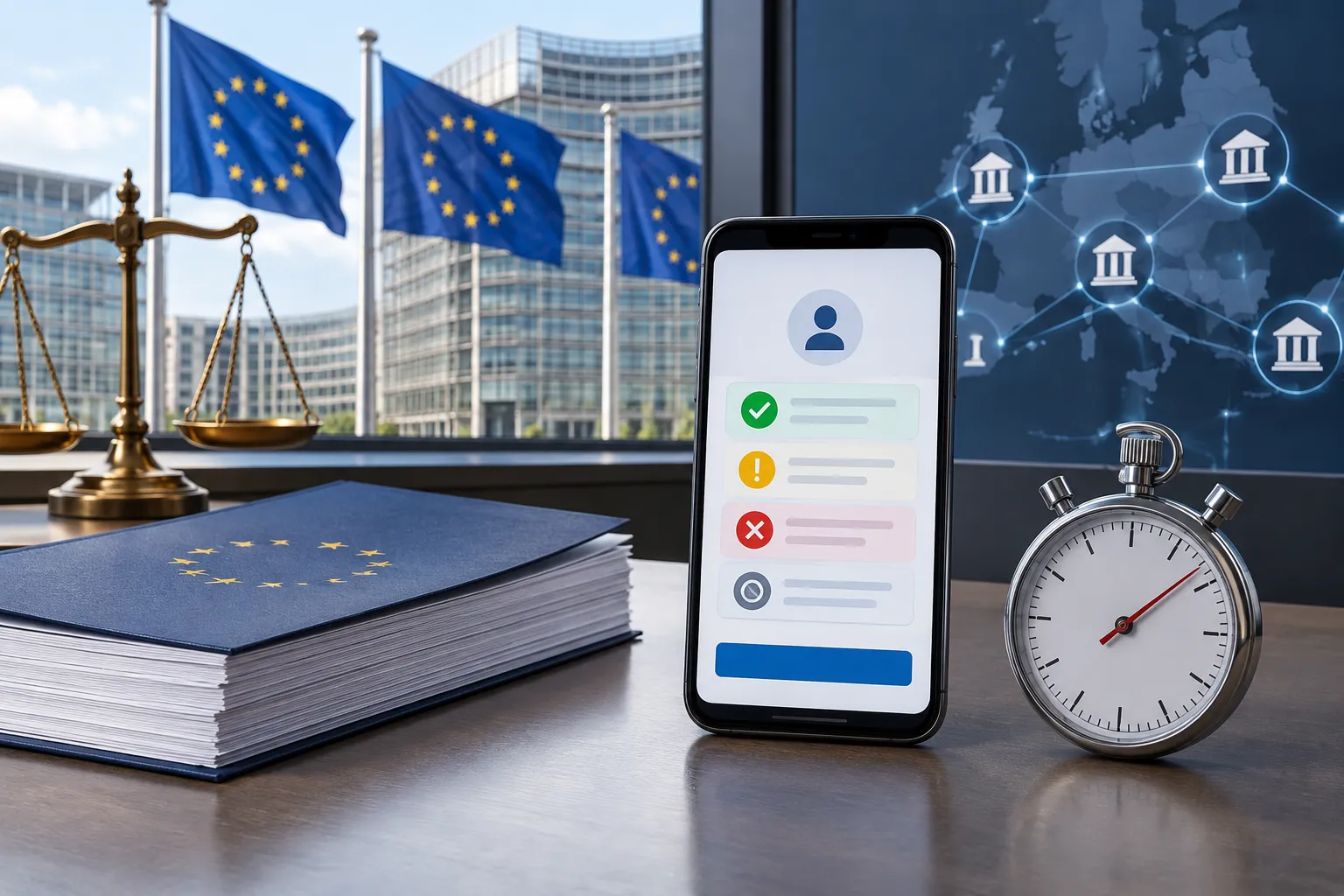
The European Payments Council implemented Version 1.1 of its Verification of Payee scheme rulebook on September 20, 2026, clarifying operations, API specifications and security after feedback from live deployment. Its directory service, operated with SWIFT, has also completed a live transition supporting provider reachability and routing. The changes come as non-eurozone EU payment providers work toward a July 9, 2027, compliance deadline. Required under the EU Instant Payments Regulation for both instant and standard SEPA credit transfers, Verification of Payee checks recipient details before authorization and must be offered free to users. The inter-provider exchange has a five-second operational maximum and can return a match, close match, no match or verification-not-possible result. A close match supplies the verified recipient name for the payer to review. A warning does not necessarily prevent a transfer: liability depends on whether a payer proceeds despite it or a provider fails to perform a required check.

Fireblocks has rejected an Axios report that Visa was in advanced talks to acquire the digital-asset infrastructure company for about $2.5 billion. Fireblocks said the reported discussions were not taking place at present. Visa declined to comment on the claim, while Coinbase separately denied reports that it was considering a bid. None of the companies has confirmed an acquisition process. The reported price would be about 69% below Fireblocks’ $8 billion valuation from its January 2022 Series E funding round. The company generated $124 million in revenue in 2024 but remained unprofitable, and it has initiated plans to cut 60 to 70 jobs amid the rumors. Visa already uses Fireblocks as an institutional client and works with it on an interoperability initiative. Those existing links provide context for the speculation, but do not establish that a transaction is under discussion.
TerraPay and J.P. Morgan have connected TerraPay Verify with Kinexys Liink so participating financial institutions can check recipient details before sending cross-border payments to mobile money wallets or bank accounts. Announced on October 22, 2026, the integration allows Liink participants to configure bi-directional API queries with TerraPay Verify. It extends a validation network that already covers account details in more than 70 countries to wallet-related checks. The partnership targets a source of payment failures: a 2026 LexisNexis Risk Solutions study cited during the rollout attributed 10% to 15% of cross-border payment failures to incorrect recipient or beneficiary details. Wallet identifiers can differ from conventional bank-account formats, making early checks useful but not a guarantee that a payment will complete. The companies have not publicly disclosed commercial terms, query pricing or country-by-country rollout plans, and the available information does not establish how much the integration will reduce failures in practice.