
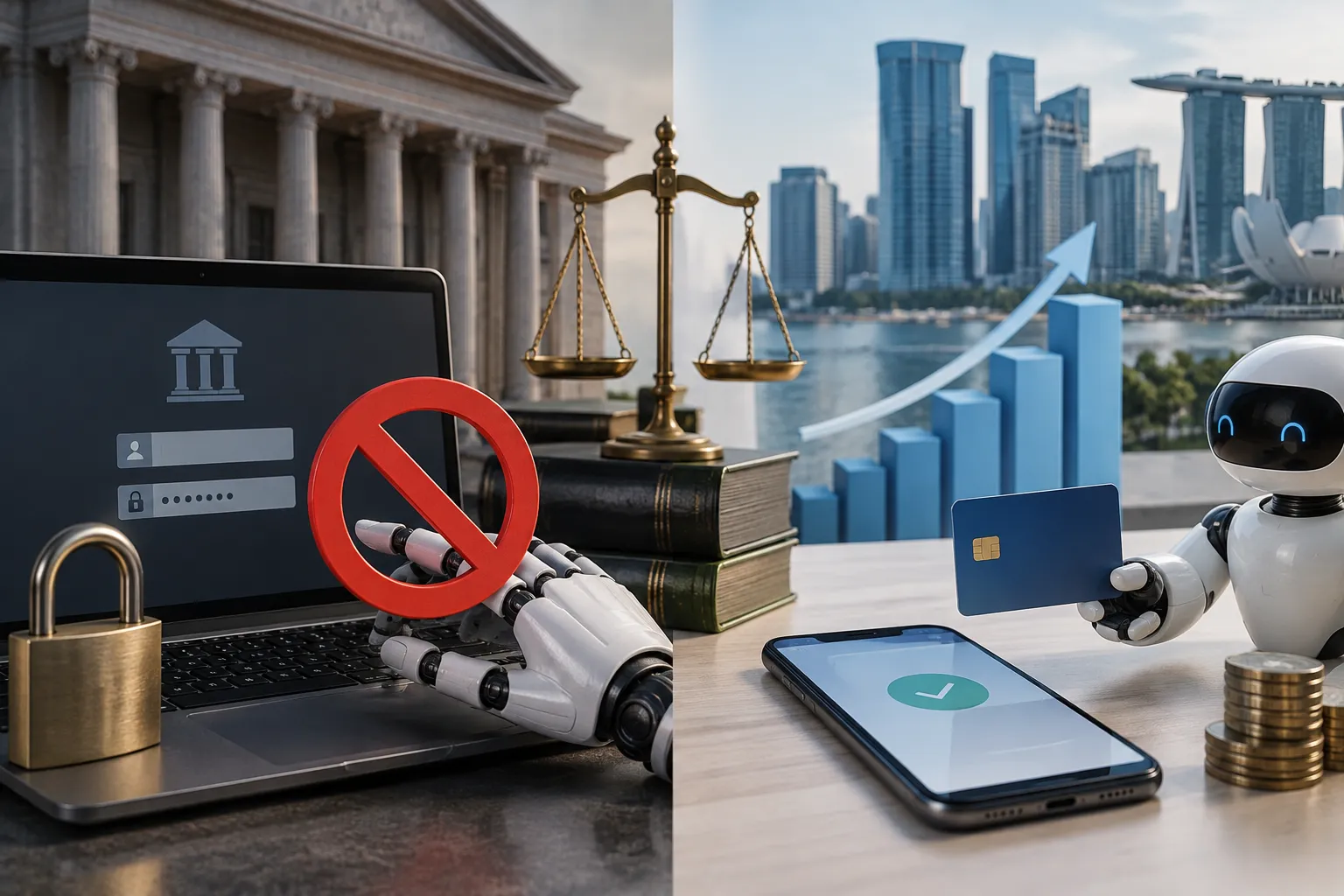
The Bank Policy Institute renewed its warning on November 21, 2026, that banks should block AI agents accessing customer accounts through unapproved channels. Separately, Stripe reported that the seven-day rolling average of daily spending through Link Agent Wallet rose nearly 80-fold between early September and mid-November. The figures exclude absolute spending totals and transaction counts, limiting conclusions about market scale. The two developments concern different access models: BPI focuses on agents using shared bank-login credentials, while Stripe’s wallet supplies limited payment credentials following customer approval. Banks’ responses also vary, with restrictions on outside agents coexisting with approved data-sharing arrangements and monitoring. Liability remains unsettled, despite changing bank agreements and developers’ disclaimers. FedScoop reported that Treasury nominee Rebekah Jurata declined to assign responsibility for a rogue agent’s unauthorized transfer. Singapore is meanwhile planning agent-verification and payment-sandbox initiatives to test safeguards for agent payments.
Major U.S. banks are warning customers that granting third-party AI agents access to financial accounts could leave them responsible for resulting transactions, errors and security losses. TechCrunch reported on November 18, 2026 that Citibank updated its agreement, while PNC and Citizens issued similar terms or warnings. The measures follow Federal Reserve Governor Michael S. Barr’s warning that banks cannot always verify agents’ authenticity, consent or adherence to customer instructions. Those contractual positions do not settle whether consumer-protection laws permit banks to transfer every loss to customers. Legal and banking-policy analysts identify unresolved questions around software delegation, unintended payments and compromised agents. Meanwhile, Visa and Mastercard are expanding agentic commerce initiatives designed to document authorization and constrain spending. UK regulatory proposals and industry authentication work remain in development, leaving a gap between commercial deployment and clear rules for determining responsibility when an autonomous payment goes wrong.